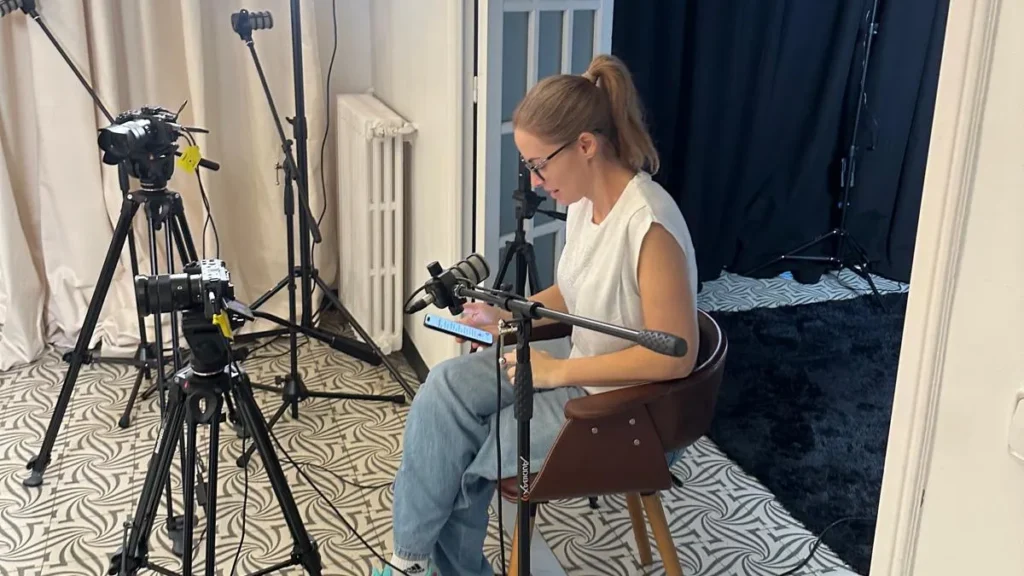
A video podcast is a podcast you can watch as well as listen to. The conversation is the same, but it is recorded with cameras and published as video on YouTube, Spotify or social media. Today it is the format we are asked for most at the studio, and that is no coincidence: many people discover a show through a thirty-second clip on their phone and then stay to listen to the whole episode.
In an audio podcast everything depends on the voice. In a video podcast, on the other hand, the face, the gestures, the light and the place where you record also matter. That is why the content works in more places at once: the full episode goes to YouTube, the audio goes to the usual platforms and the best moments are cut vertically for Instagram, TikTok or LinkedIn.
The practical difference lies in the preparation. With audio, good microphones and a room without echo are enough. With video, however, you also have to think about framing, lighting and what can be seen behind each person.
The main reason is visibility. YouTube has become one of the platforms where podcasts are consumed most, and social media algorithms reward video. On top of that, video builds trust: watching someone talk calmly for an hour says much more than reading something they wrote.
It also changes the way you work. A single recording produces many pieces, so the effort of preparing an episode pays off for weeks.
You do not need a TV set, but you do need four things sorted out:
The most common set-up uses three shots. First, a wide shot that shows everyone and the space. Then, a close-up of each person, which is used when they speak. Finally, a detail or cutaway shot to give the viewer a break. With that, the episode can be cut like a TV show, switching shots depending on who is speaking.
If you record with several people, also think about where they sit. Ideally, each person looks at the other and not at the camera, because the conversation then looks natural. In addition, leave a little space in the frame on the side each person is looking towards.
There are mistakes we see again and again when someone comes to the studio after trying at home:
None of these mistakes is serious on its own. Together, however, they make good content look improvised.
If you record on your own, regularly and without much movement, you can set up a decent corner at home. In contrast, if you want guests, several cameras and a polished image, it usually pays to hire a studio by the hour. In our case, every session includes three cameras, professional sound and a technician, so you just sit down and talk. You can see how it works in podcast recording in Barcelona.
Once recorded, the full episode goes up to YouTube and the audio to the podcast platforms. If you also want to publish it as video on Spotify, we explain it step by step in how to upload a podcast to Spotify, and Spotify lists the accepted formats in its guide to publishing videos. What is more, each episode can be turned into several short pieces for social media, which is what we do in social media video production.
In the end, a video podcast is no harder than an audio podcast. It simply asks you to think a little more about how what you say looks, and if the camera makes you nervous, our tips for public speaking will help. Once that part is sorted, you can focus on what really matters: having a good conversation.
Written by Adina Harnagea, journalist and co-founder of the studio.