Choosing a podcast camera raises far more questions than choosing a microphone, because there are options at every price and almost all of them promise cinema quality. The reality is simpler: for a video podcast you do not need the best camera on the market, but one that records a long conversation without problems and with a good picture.
Two things affect the picture more than the camera itself: light and sound. A good camera in a dark room gives a worse picture than a phone with well-placed lighting. And, as we said in which podcast microphone to choose, people quickly abandon a video with bad audio. So, if your budget is tight, start by sorting out those two things.
Today’s phones record in very good quality and are a perfect way to start. However, you need a sturdy tripod, to make sure it does not overheat during long recordings and enough free storage. It is also best to use the rear camera, which is almost always better than the front one.
It is convenient if you record sitting at your computer or do remote interviews. However, in a room with several people it falls short, because it usually has little room for framing and a weaker picture in low light.
This is the next step when you want a clearly professional picture, with a blurred background and good performance indoors. In this case you need to look at details that do not appear in the advertising, as we will see below.
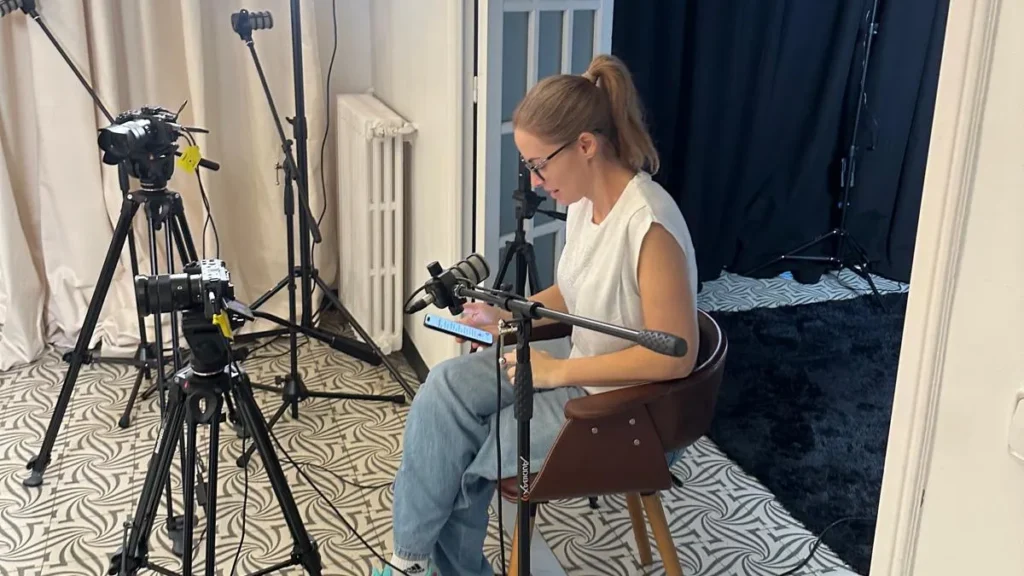
You can make a good podcast with a single camera, especially if it is one person talking or two people sitting together. Even so, with two or three cameras the episode changes completely: you can switch between a wide shot and close-ups of each person, and the conversation gains pace. We explain this in more detail in our article on the video podcast.
To switch cameras live you use a video switcher. At the studio we work with the Blackmagic Design ATEM Mini Pro ISO, which also records each camera separately so you can re-edit later.
We record with three Sony FX30 cameras, from Sony’s cinema line, set up for wide, medium and close shots. They are connected to the mains and to the switcher, so they can record long sessions without interruptions. You can see the whole setup in podcast studio equipment.
If you are going to record at home every week, buying a simple camera makes sense. On the other hand, if you need several cameras, good lighting and someone to take care of everything, it is usually better value to hire a studio by the hour. You will find the rates in podcast studio prices.
Written by Adina Harnagea, journalist and co-founder of the studio.