Knowing how to conduct an interview is not about having a list of brilliant questions. It is about getting the other person to say something they have not said anywhere else. I have spent years interviewing people on radio and television, and almost everything that works comes down to three moments: what happens before, what happens during and how you close.
Preparation is half the job. Read what your guest has published, listen to an earlier interview and look for the subject nobody has asked them about yet. If everyone asks about their company, perhaps the interesting part is the day they nearly closed it.
Also, talk to the guest a few days beforehand. You do not need to show them the questions, but do tell them the tone of the show, how long it will last and what kind of conversation you are after. People relax a great deal when they know what to expect.
The best questions are open and specific at the same time. “What motivates you?” is open, but so general that the answer will be general too. On the other hand, “What did you do the night they turned down your first project?” makes the guest tell a scene, and scenes are what the audience remembers.
If you want to organise all this in writing, our guide to writing a podcast script explains how to structure the episode without it sounding read out.
The most common mistake is thinking about the next question while the guest is talking. That is when you miss the best part, which almost always turns up in a detail nobody expected. So listen properly and follow up: “And what happened next?”, “How did you feel?” or simply “Tell me more”.
Silence helps too. When someone finishes a sentence and you say nothing, they often keep talking and add the most honest part. Holding those seconds is hard at first, but it works.
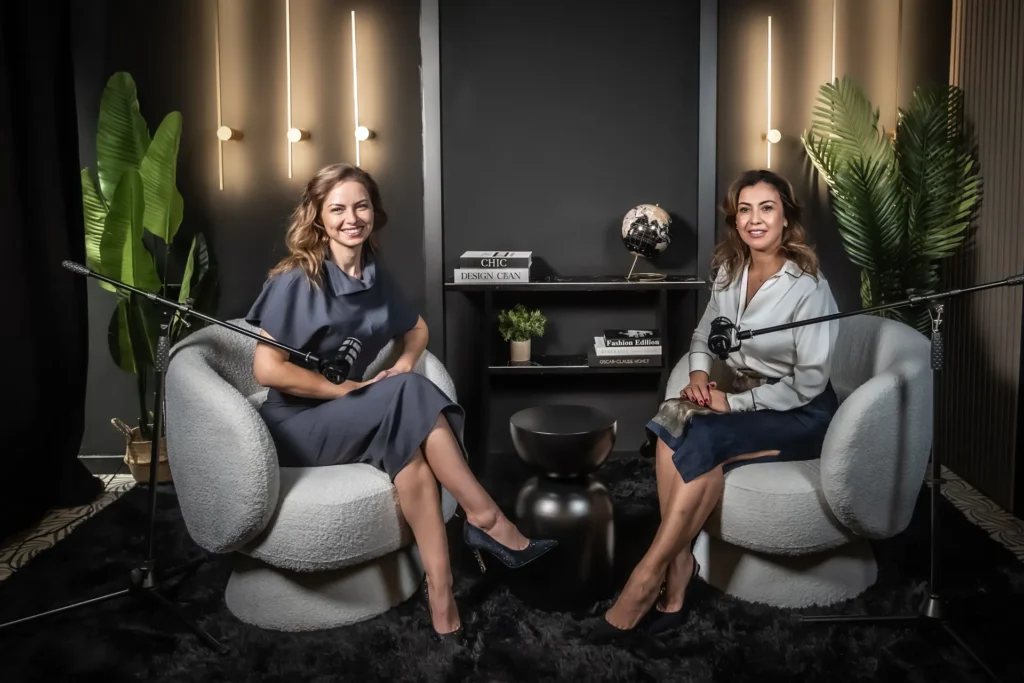
An intimate interview needs a quiet space, with no interruptions and good light. Talking in a noisy café is not the same as talking in a prepared room, where everyone has their own microphone and nobody has to think about the technical side. In our Dark Studio, for example, the black wall and warm light help the conversation become more personal almost without you noticing.
The ending is remembered as much as the beginning. A good way to close is to bring back something the guest said at the start and ask whether they still see it the same way. Another is to ask for one specific piece of advice for the listener. Finally, thank them calmly, without rushing, because those seconds also show on the video.
If you get nervous in front of the microphone, our tips for public speaking will help. And if you are curious about the different meanings of the word, you can look it up in the Cambridge Dictionary.
In the end, learning how to conduct an interview means practising. Every conversation teaches you something for the next one.
Written by Adina Harnagea, journalist and co-founder of the studio.